Showing posts with label comedy. Show all posts
Showing posts with label comedy. Show all posts
Tuesday, July 15, 2014


Sunday, September 23, 2012
Clooney It!

 The Clooney Method (I've coined this term
without his permission but he's welcome to call me anytime to discuss it) in my
mind centers around a basic concept of film acting which is to "just think
it." I've seen him use it since
his earliest days on ER which allows the audience to see how you feel
without having to tell them how you feel.
It's a smart way to act but it's not an easy way to perform. It's nerve wracking to experiment with
silence in a live performance. What if
the audience thinks you are boring or you just forgot what you are going to
say? However, if you do it with
intention, it's a very intriguing choice.
The thing I like most about pausing is the feedback you get from the
audience. They tell you how much liked
it because they could interject their own interpretation into what was going on
during the scene rather than having it spoon fed to them. That's what makes George Clooney such a
great actor - he respects his audience and their ability to get what he's
doing. He doesn't have to do it all for
them. The ending of Michael Clayton
is a perfect example of this. After
exposing Tilda Swinton's character for the evil lying bitch she is - the last
three minutes of the movie have just a couple of lines and a reaction close up
in a taxi of Clooney contemplating what he's just done and what he's been
through as the ending credits role. It's
a ballsy shot because it gives the audience a chance to think with the
character in real time about what's just happened. It's just one example from a whole range of
movies in which his characters take their time to react to things.
The Clooney Method (I've coined this term
without his permission but he's welcome to call me anytime to discuss it) in my
mind centers around a basic concept of film acting which is to "just think
it." I've seen him use it since
his earliest days on ER which allows the audience to see how you feel
without having to tell them how you feel.
It's a smart way to act but it's not an easy way to perform. It's nerve wracking to experiment with
silence in a live performance. What if
the audience thinks you are boring or you just forgot what you are going to
say? However, if you do it with
intention, it's a very intriguing choice.
The thing I like most about pausing is the feedback you get from the
audience. They tell you how much liked
it because they could interject their own interpretation into what was going on
during the scene rather than having it spoon fed to them. That's what makes George Clooney such a
great actor - he respects his audience and their ability to get what he's
doing. He doesn't have to do it all for
them. The ending of Michael Clayton
is a perfect example of this. After
exposing Tilda Swinton's character for the evil lying bitch she is - the last
three minutes of the movie have just a couple of lines and a reaction close up
in a taxi of Clooney contemplating what he's just done and what he's been
through as the ending credits role. It's
a ballsy shot because it gives the audience a chance to think with the
character in real time about what's just happened. It's just one example from a whole range of
movies in which his characters take their time to react to things.  In Fantastic Mr. Fox, Clooney is the
voice for a fast talking red fox who tries to stop stealing from three farmers
that he's been victimizing for years so he can raise a family. But despite his wife's pleas, he goes back to
trying to get that one last big score.
Think Ocean's 11 but with cute little possums, badgers and
foxes. What makes this stop action
animation movie so good is that the characters are not jumping around or
singing but will pause to look at each other and blink before they say
anything. It's those moments of silence
that are pure comedy gold. He's
perfected it in other movies like The Descendants, Oh Brother Where Art
Thou?, Up in the Air and Confessions of a Dangerous Mind (which was
his directing debut.) The
"Pause" is something I've tried to incorporate more into my own
acting and improv workshops. It gives
the actor a higher status and the audience a chance to reflect on what has just
happened.
In Fantastic Mr. Fox, Clooney is the
voice for a fast talking red fox who tries to stop stealing from three farmers
that he's been victimizing for years so he can raise a family. But despite his wife's pleas, he goes back to
trying to get that one last big score.
Think Ocean's 11 but with cute little possums, badgers and
foxes. What makes this stop action
animation movie so good is that the characters are not jumping around or
singing but will pause to look at each other and blink before they say
anything. It's those moments of silence
that are pure comedy gold. He's
perfected it in other movies like The Descendants, Oh Brother Where Art
Thou?, Up in the Air and Confessions of a Dangerous Mind (which was
his directing debut.) The
"Pause" is something I've tried to incorporate more into my own
acting and improv workshops. It gives
the actor a higher status and the audience a chance to reflect on what has just
happened.  In the Clooney improv exercise, I ask my
actors to start the scene doing an activity and to not talk to each other right
away. I explain that 90% of human
communication is non-verbal in real life and we need to explore how a character
is at just being rather than forcing a scene to be funny. So the actors will be doing something like
packing and really exploring their surroundings and their physicality. They need to show a physical reaction to each
other without words. At first it was
hard for some of the actors to do - they could go maybe 20 to 30 seconds
without speaking. But as we did the
exercise more and made people wait longer and longer to talk, something really
interesting happened. The pausing made
the scenes really funny. What wasn't
said and implied physically was more comical then any one-liner we could think
up. The scenes had a new maturity to
them and taking our time to respond just made the lines that were said with a
straight face hilarious. The players
watching noticed that the scenes were actually easier to follow since there was
not all the usual over-talking to distract from the scene - having the option
to "Clooney it" gives the actors a wider range of techniques to pull
from during the course of a show.
In the Clooney improv exercise, I ask my
actors to start the scene doing an activity and to not talk to each other right
away. I explain that 90% of human
communication is non-verbal in real life and we need to explore how a character
is at just being rather than forcing a scene to be funny. So the actors will be doing something like
packing and really exploring their surroundings and their physicality. They need to show a physical reaction to each
other without words. At first it was
hard for some of the actors to do - they could go maybe 20 to 30 seconds
without speaking. But as we did the
exercise more and made people wait longer and longer to talk, something really
interesting happened. The pausing made
the scenes really funny. What wasn't
said and implied physically was more comical then any one-liner we could think
up. The scenes had a new maturity to
them and taking our time to respond just made the lines that were said with a
straight face hilarious. The players
watching noticed that the scenes were actually easier to follow since there was
not all the usual over-talking to distract from the scene - having the option
to "Clooney it" gives the actors a wider range of techniques to pull
from during the course of a show. 
In the show The Office, Steve Carrell,
John Krasinski and the rest of the talented cast use the Pause on a regular
basis. In fact, most of the time, John
Krasinski's character Jim gets the non-verbal reaction shot which is always
priceless. This sitcom mockumentary on
life in a fictional paper company captures some extraordinarily moments between
the characters which are unsaid. Pam
and Jim's early relationship and missed chances at love stem largely from their
inability to actually speak to each other about how they really feel and those
almost moments are the ones that are the most poignant. I think any actor who wants to learn how to
act for the camera needs to watch as many episodes of The Office as
possible. If you actually work in an
office, you'll see a wide range of office dynamics and business prototypes that
makes the show feel so authentic and the little silences feel real.
Now for those of you who are not actors might
be wondering how the gift of the Pause might work for you. How can learning to "Clooney it"
make your life better? I've applied it
strategically in my own life and believe me using silence in a conversation can
definitely give you the upper hand, especially in business. My day job is as a fundraiser and I've been
doing it for over 20 years. At my last
job, we had a consulting group come on who definitely had the market on
condescension and arrogance. Each week
we needed to meet one-on-one with a consultant who would belittle us because
their overpriced consulting was not getting the results they were hoping
for. I used to hate those meetings
especially with one of the consultants who was about 15 years younger then me
with far less fundraising experience.
She was also the daughter of the woman who owned the firm. She was toxic and difficult to talk to
because she would belittle everything you said - I suppose to deflect her own
inexperience. It was demotivating for everyone. However, she had the power to report to the
powers that be that the staff was being uncooperative and that's why the their
"methods" were not working.
So after doing an improv workshop where we did a status exercise in
which you had one character not speak while another was allowed to speak as
much as they wanted - I learned that when you don't talk very much you yield much
more power. I decided to try this theory
the next day with the young consultant.
She would ask what I had done that week, I would tell her and she would
begin to tear me down. Rather than
becoming defensive as I usually did, I looked her in the eye and didn't say
anything. She would ask me if I
understood what she had said and I simply replied "Yes" and
maintained eye contact. The silence was
very uncomfortable for her. She would
start to talk, repeating herself extensively and using circular logic. I would simply reply "That's an
interesting point," maintain eye contact and say nothing else. She would talk more and more stopping only
to ask me if I understood which I answered "Yes," still maintaining
eye contact. After an hour of her doing
all the talking, I left the meeting knowing that she was exhausted. I was elated. It had worked in real life and my nemesis
didn't know what had hit her.
Interestingly enough, she requested to meet with me less than the other
people in the office. When we did meet,
I looked forward to it - happy to play
that little mind game and wear her out so she went easy on my fellow staff
members.
 But silence does not have to be used to
manipulate people. It's also great
listening tool. When I've met with a
potential donor and asked them what projects excite them and what they have a
passion for - I sit back and listen. I
get great information because it's them and not me doing the talking. When you are not worried about what you have
to say - you flat out become better at understanding where the other person is
coming from and it can help meet their needs.
The actor Larry Hagman of I Dream of Jennie and Dallas fame
has been taking a "talking fast" one day a week for over 30 years and
will not speak for 24 hours. According
to him, it is enormously freeing to not have the pressure to speak and you
connect to people on a deeper level.
But silence does not have to be used to
manipulate people. It's also great
listening tool. When I've met with a
potential donor and asked them what projects excite them and what they have a
passion for - I sit back and listen. I
get great information because it's them and not me doing the talking. When you are not worried about what you have
to say - you flat out become better at understanding where the other person is
coming from and it can help meet their needs.
The actor Larry Hagman of I Dream of Jennie and Dallas fame
has been taking a "talking fast" one day a week for over 30 years and
will not speak for 24 hours. According
to him, it is enormously freeing to not have the pressure to speak and you
connect to people on a deeper level.
So if you're tired of feeling like you talk
too much and that gets you into trouble, try to "Clooney it." Give pausing or hell just not talking for a
while a try and see what happens. It
can help your acting, your business and can help you listen better to those
that are nearest and dearest. There is
an old adverb, "It is better to remain silent and be thought a fool than
to open your mouth and remove all doubt."
So try not talking. It can help
you think clearer and rather then being pushed into reactive-defensive traps
that keep you from being able to go to the next level. Take
a cue from George Clooney- a silver fox who is not afraid to use silence to get
his point across.
Sunday, March 25, 2012
My Improvelution

I've been doing improvisational theater on and off for about 28 years. My love affair started in 1984 when I got to take a class at the Florida State theater department. I loved the non-structure of it. You had to understand how to work with your scene partner but you were free to create any character, anywhere and at any time. You were not stifled by the words of the playwright because second by second you were creating the character, the dialogue and the movement of the scene instantaneously. It could be in Ancient Greece or modern times or a 1950's sitcom - it could be where ever your imagination took you because you could mime your scenery, costume and props. Your partner had to take what you served them and volley it back to you so that you could both build a really good scene. That's what I love about improv - it can be as exciting as a tennis match. You have control and yet absolutely no control at the same time. You might come in with a strong idea of how the scene would go but then your partner would have a different idea and you had to go with that. Good improv scenes are a lot like life - the best ones run on possibilities and acceptance - allowing yourself to say "Yes, and..." not "No, that will never work." And just like life, you will meet obstacles that will challenge how committed you are to really sticking with something that you love.

I didn't major in theater when I went to college because it didn't seem practical and frankly I was afraid I wasn't good enough, even though I was the president of drama club in high school and got cast in plays. So I settled for something that seemed to make sense for me - becoming a dietitian. I was very conscious about nutrition and exercise so I figured I would be a good candidate to help counsel others on how to maintain their health. I had left high school with a 3.8 average and was ranked number 21 in my class. College should have been a great time for me - but because I was following my practicality and not my passion - I was floundering. I was getting Ds and even failed a biochemistry class which had never happened to me before. I was having crying jags for hours on a regular basis because I was so miserable - the only bright spots were the theater classes. I did audition for plays at FSU, but found that most of the grad students and professors only wanted to cast theater majors and those that had been cast in shows before. I knew people who had gone for a four year degree in theater and still didn't see any stage time because the same people kept getting cast. I knew it wasn't me but the system, but it was still pretty frustrating. So after four years of giving it the old college try - I left Florida State without a degree in anything and my spirits pretty low.
I got back to Miami and started to wait tables which ironically would have been exactly the same thing I would have done if I had gotten my bachelors in Theater. The world of food service had it's perks like tips, cute waiters and discounted entrees but I needed more from my life. I went to see a group called Mental Floss to see what the professional improv acting scene in Miami was like. They were extremely funny and just what I was looking for - they even had a few women in the group. When they announced that they would have auditions I was totally there. I remember that I got to do a scene with Marc who was a company member and it was really funny. The feedback was very positive and I was asked to start doing workshops with the group which would eventually lead to performing on a regular basis.
The workshops were led by the founder who was frankly the weakest person on stage, but I was hoping he'd be a better instructor then performer. He gave some good direction but when the players from the group were there, they openly disrespected him which didn't set a good tone in the workshops. I tried to stay out of it because I just wanted to start performing. Finally, after a few months, I finally got my chance and got to do a show with the regular cast. It was an amazing night - one of those times when everything flowed. I was in half the games in the show and it seemed like one of those perfect tennis matches when you could hit the ball back with the same strength that you received it. I left the theater walking on air and one of the guys, Patrick, asked me if I wanted to get something to eat with the company. I felt so honored and accepted. That night started my road to doing improvisation professionally.
Patrick and I started dating shortly after that which at first seemed to be a really good thing. He saw himself as my mentor - someone who had gotten his Master's Degree in Fine Arts at the Asolo Conservatory in Sarasota which ironically was a program of the Florida State Theater department. He had very definite ideas about what sort of performer I should be and no matter how much the audience seemed to enjoy my performance, he never really had much positive to say - he never put me down overtly - but he never praised me when I knew I had done a really good show. I should mention that my last boyfriend was a guy who got angry for no reason, insulted me and also hurt me on one occasion so having a passive-agressive guy like Patrick seemed like a step up.
As time went on, I created characters like Fluffy La Puff, a stereotypical dumb blond that made Jane Mansfield look like Einstein, Billy Idol's little sister, Billy Jo Idol and Eunice Frump, a country bumpkin who was the creator of "Puddin' on a Bun." I'd get great feedback from the audience after the shows - people would come up to me in the lobby and tell me how much they enjoyed what I did, that I reminded them of Carol Burnett or Gilda Radner (two of my comedy goddesses by the way), but I rarely got much positive feedback from the other guys in the group. It wasn't just me, there were a few other women in the troupe that were also experiencing the same thing - always being made to feel like the weak sisters in the group. In the years since then, I've talked to other women who have had similar experiences. The comedy world can be extremely sexiest and hard on even the most talented of women. Even John Belushi used to give Gilda, Jane Curtain and Laraine Newman a hard time on Saturday Night Live. Belushi flat out stated that women were just not as funny as men. And so it went, the audience loved the women in the group and the men just kept limiting what we could do. It was like hitting your head against the wall. I wanted to leave but since I was also dating Patrick, it felt like my entire world would collapse - no boyfriend and nowhere to perform comedy - who else would want me? I felt really trapped and I didn't know how to get out.
Then one day, I got a call at work from Marc who was now the director who told me that he and the other guys in the group decided to put me on inactive because I was not up to speed. He told me not to feel bad that another woman in the group had also been asked to leave. When I asked him why he never gave us any type of direction in workshop for what we needed to improve on - his reply was "You're supposed to know!" I replied, "The whole point if you being director is to direct people who don't know - so if you're not happy with what we do - then it's your fault for not acting like director!" which probably was not what he wanted to hear. Now I'll admit that I probably had areas that I needed to work on but if they are never brought to your attention, you'll never get better. It also didn't help that the women in the cast felt like they were being singled out. Amazingly, I still decided to help out working in the box office hoping they would put me back on stage again. The best part was having people walk up to me and ask if I was in show that night and me telling them that I working behind the scenes. "Man, that sucks, we wanted to see Fluffy," said one patron within ear shot of Marc. That same week, I also has two people stop me in Dadeland Mall to tell me how much they enjoyed me in the shows. My guardian angels were sending me signs that all was not lost and that despite the opinions of some of the guys in the group - I was a good performer - I just needed some solid direction.
 One night after a show, the guys came over to Patrick's to play cards. It was raining pretty hard and they were out of poker snacks and expected me to go out in the monsoon to get them. I should have said "Hell no bitches!" but instead I got my purse, my keys, and slumped out of the door. I fumed in the car but then got a wonderful idea. I came back and put out their food and then asked sweetly if I they would deal me in. They condescended and figured that I probably hadn't played cards much so they could exploit that. Unfortunately for them, I'd been playing cards since I was ten, when my Mom and Dad used to show us the ins and outs of five card draw, seven card stud and black jack during our summers at Fort Myers Beach. I knew a straight from a dead man's hand and didn't need a ton of wild cards to win the pot. At first I didn't bet much and pretended that I didn't understand what a good hand was. They rolled their eyes and took my money in that first round. I could see them chuckling - even Patrick was joining in. I kept my poker face knowing that I would win it back and then some. I won the second hand and pretended like it was pure luck - again betting a modest amount. As the night wore on, I was winning the majority of the pots, folding every now and then to not let on that I was setting them up for that last big win. Finally, we got to the last hand in which they all bet their money (which was about $60 bucks) and I had another $20 in the pot. Everyone had to show their hand and Sal thought he had it with four queens which included three face cards a wild card (you can use wild cards to help substitute when you don't have enough of one card to complete your hand - it's a bonus if you're lucky enough to get one). Unfortunately, I had four kings (without a wild card) and an ace which beat his queens. Now, I know that guardian angels don't usually get involved in poker, but I felt that they worked through me to let those boys know that you should never assume that a woman is incapable of anything - whether it's improv or poker. Their stunned faces were priceless and it had stopped raining when I got back in the car to drive home.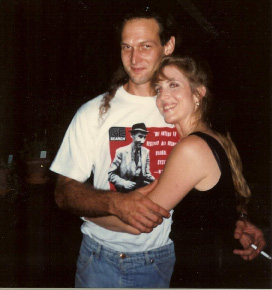
A few months later, I had finally had enough and stopped going to Mental Floss altogether. In the meantime, I started auditioning for other theater companies and got cast in almost everything I tried out for. At one time I was in different stages of rehearsals for three shows and I met the love of my life - Max. Patrick and I finally broke up. It felt great to be free of all that negativity.

A year later, I started my own improv theater group, the Eclectic Company because I loved the art of improv and wanted to do it my own way. I got a top notch group of actors who later unbeknownst to me - had also been told by Mental Floss that they were not good enough either. The Eclectic Company shows on South Beach were a huge success and word got back to the guys at Floss that there was a new game in town and it was being run by me. That was the start of my journey as a woman who was willing to buck the trend of improv groups led by a bunch of white guys. It has not always been easy - performing spaces and actors have come and gone, but my love of the art of improv has always been there - whether I was actively performing or teaching it. Today, as the Artistic Director of the OTC Comedy Troupe, I get to work with smart and funny women and men who just want to do good improv and support each other.
So to those that feel like there are obstacles put in their way and begin to question their passion - I say stick with it and don't look at a roadblock as a bad thing. Sometimes it's a guidepost that puts you on a different path. If I hadn't left Mental Floss, I would have been trying to please people that just weren't going to give me a chance no matter what I did and it would have sucked the joy of improv right out of me. I never would have met Max. I never would have seen that I was capable of innovating the art like doing a live improv webshow that got over 225,000 views. Those roadblocks ended up being the best things that ever happened to me. As any smart gambler can tell you - you don't have to play every hand you've ever been dealt - you just have to stay in the game.
Sunday, September 11, 2011
Laughing at Bullies
My bully Lisa stepped out onto the sidewalk just a few doors down from my house. She had been bullying me since elementary school. But now at 11, I was taller and she was nastier. I never knew what I did to make her want to bully me. The first time it happened we were both in the first grade and I got a Partridge Family lunch box and apparently she hated the show (okay - in hindsight I understand why). I had my cherry juice in the matching thermos and she grabbed it and smashed it right on Danny Bonaduce's face. The red juice spattered everywhere like a bloody scene right out of the movie Scarface. I told my Mom, but Lisa's family was the one house on the block with the lawn that was never mowed and the dad with the notoriously bad temper - so the whole neighborhood stayed clear. They were never invited to the Friday night dinner parties. I tried to avoid her, but she'd pick up my scent and track me down. I didn't have to track her scent, it was pretty bad and the sight of her made my eyes water. My stomach became an instant gas chamber.
She stood there in her popsicle splattered t-shirt. The juice had run down her arm which was stained red and mixed with a light dusting of dirt, her hair filled with sticks and leaves. Apparently she had to wrestle that popsicle to the ground to eat it. I should have taken the long way home, but it was starting to thunder and I needed to get home quickly. Rain storms come in fast in Miami around 4:00 p.m. I had about 5 minutes before it would pour. Lisa wouldn’t budge and was making it a point to tell me how fat and stupid I was, even through I had lost weight and was an honor student. But each word made me doubt my weight and my intelligence - that's how bullies wear you down.
I tried to walk around her but she kept getting closer. Sensing that I might be cold cocked in the stomach once again with her sticky juice stained hand – I decided to try a different tactic. I put out my butt, started to walk funny and taking my cue from a Carol Burnett sketch, said “Mr. Tudball – I have pencils to sharpen!” Lisa stepped back and looked at me with eyes as big as golf balls. "What did you say?" she asked. "I have pencils to sharpen!!" I replied, sticking my butt our even further. I heard a boy laughing behind me and turned to see her older brother Michael watching the whole thing unfold. He was the one nice person in the family who got along with the rest of the kids on the block. "Carol Burnett - Mrs. Wiggins, I love that sketch." He then turned to Lisa, "Good God, haven't you ever heard of a napkin? C'mon Mom wants you home before the storm hits." Lisa turned still looking at me with my butt sticking out. They both started to laugh and I ran home just as the first drops were beginning to splat.
Making people laugh has always been a refuge for me whether I was that chunky little girl with the David Cassidy Tiger Beat magazine or the girl in Junior High who had lost a ton of weight over the summer vacation. Just like a runner who gets that endorphin high after a run or a heroin addict that needs that rush from their next fix, comedy is my drug. It just makes me happy. I get a heady feeling and a blast of energy after a show with my partners at the OTC Comedy Troupe. Whether it's doing improv for an audience of 300 or a show for 10 people in a coffee shop - just bringing laughter into someone's life is something that I take very seriously. I've seen it heal me. I've seen it heal others.
I've seen the parents of children with developmental disabilities hire my comedy troupe for a show and then ask us to do some really blue comedy that was totally politically incorrect because they just needed to escape for a few hours. One night, we performed for two hours straight - not stopping for our usual intermission because the comedy and the healing needed to keep on going. The energy of the room was transformed and their faces were brighter -- ready go back home and deal with a child that they loved dearly but who was not emotionally equipped to communicate that love back.
I've seen my actors who had a piss poor day at work revive at workshop and feel renewed after a "play-date" with the other company members. I've pulled my self out of painful funks and crying jags by dragging myself to the web show and getting a rush of energy from our audience.
I'd like to say that once you leave school, you leave the bullies behind. But as any women whose been at the mercy of the Mean Girls can tell you, it doesn't always happen. It still pervades at our colleges, social circles and workplaces, but I've found that doing comedy is a good escape for that. Ironically, I am considered a dead ringer for one of the biggest bullies out there- Ann Coulter. My various video jabs at the conservative cougar have brought accolades and condemnation from both sides of the political aisle. Sometimes it's pretty vicious and obscene. It's very clear that those cyber bullies really need to get a life which is what I tell them right before they are blocked forever from my YouTube channel. If only it was that easy in real life.
As far as dealing with bullies goes, you get better at handling it as you get older, but there are times when those mean girls or guys can make you feel as small as that little girl with the broken thermos. You can either go back there and believe all those bad things about yourself, or move forward, learn to laugh and feel some compassion for those bullies. Lisa didn't have a great home life, felt ashamed and took that anger out on me. After the Mrs. Wiggins episode, she bullied me less and less until it stopped - she just wasn't that scary anymore.
The cyber bullies don't have a real way of communicating with real people so they grind their angst anonymously on any internet venue they can. The mean folks confuse passivity for weakness which is a mistake because sometimes you just have to pick your fights. The quiet ones can strike out with terrific and focused strength when they are pushed too far. My tongue can be a real dagger when it needs to defend me - when the nice Kelley has to be protected by the sardonic Kelley. It's not something I like to use very often, but it's nice to know that I have it in me when it's needed.
For me, laughter is the best medicine and comedy is my drug of choice. It helps me keep a stiff upper lip and gives me the courage to stick my butt out. After all, I've got pencils to sharpen.
Subscribe to:
Posts (Atom)